


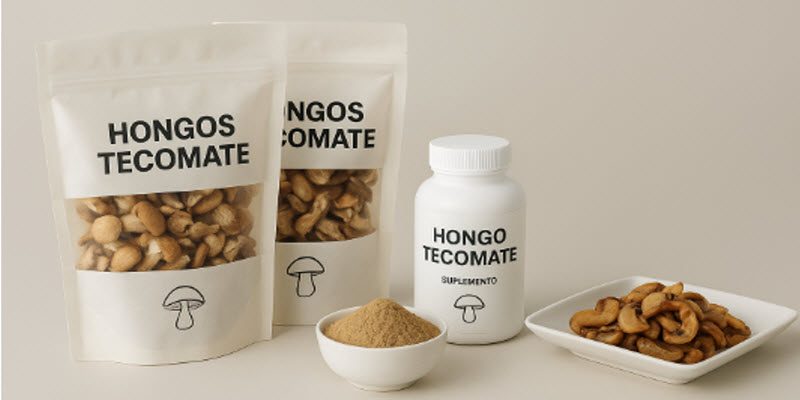
I have detected an increase of more than 900% in searches for edible tecomate mushroom. The market opportunity that your competition does not yet see is to position yourself first in an emerging niche, before the industry understands its nutritional potential, its rarity, and its gourmet value. Whoever moves now will be able to capture demand, educate the consumer, and dominate a category that does not yet exist.
The market is screaming for innovation. Are you listening? Our new article gives you the knowledge that most still do not have. The wave is coming. Are you going to watch it pass by or are you going to ride it?
Ingredient Innovation in the Food Industry
The global demand for sustainable, nutritious, and ethically produced food ingredients is driving a wave of innovation in the industry. In this scenario, the Fungi kingdom emerges as a key protagonist, offering solutions ranging from high-tech alternative proteins to the traditional richness of wild mushrooms like the tecomate.
For professionals in the ingredient industry, understanding the multifaceted potential of fungi is fundamental to developing the products of tomorrow.
Filamentous Fungi: A Revolution in the Food Industry
Fungi are versatile organisms with a beneficial impact extending over centuries, from their key role as decomposers in ecosystems to their use in food and beverage fermentation. Beyond traditional uses, filamentous microscopic fungi and yeasts are revolutionizing the industry as producers of secondary metabolites, pharmaceutical ingredients, and, most notably, as a source of alternative proteins.
Mycelium is considered one of the most promising protein sources for the future, recognized for its high nutritional quality. Mycoproteins have consolidated themselves as a viable alternative to meat. Not only for vegans and vegetarians but for any consumer looking for healthier and more sustainable options. These fungal proteins offer an exceptional nutritional profile:
- Lower fat and calorie content.
- Low energy and fat profile, making them an ideal and healthy protein source.
- Provide antioxidants and essential amino acids, being cholesterol-free.
- Evidence suggests broader health benefits, including improvements in cardiovascular health, advantages in the microbiota, potential satiety, and metabolic and muscular benefits.
Furthermore, the production of these meat analogues based on filamentous fungi is highly efficient, requiring only half a kilo of plant matter plus water to produce a kilo of mycelium. Innovative companies are cultivating the final structure of the mycelium to avoid the addition of texturizers.
This results in less processed foods with textures that faithfully mimic animal meat. Precision fermentation, using genetically modified microorganisms like the yeast Pichia pastoris, also allows for the production of genuine animal proteins, opening new avenues for sustainability in industrial-scale food production.
Some fungi and yeasts are used biotechnologically to extract compounds such as pigments (carotenoids), enzymes that enhance flavor, or specific aromas, demonstrating the vast range of bioactive compounds that the Fungi kingdom can offer the industry.
The Tecomate Mushroom (Amanita caesarea): An Ingredient with History and Future
In contrast to the high technology of mycoproteins, we find natural treasures like the tecomate mushroom, scientifically known as Amanita caesarea. This mushroom, also called yellow mushroom, red mushroom, or egg mushroom (hongo yema), is a native Mexican ingredient of great culinary and nutritional value.
This mushroom grows wild during the summer and until late autumn, coinciding with the season of abundant rains and temperatures that can reach 35°C in regions like the southwest of the State of Mexico. It is found in humid field areas and near tree bark.
Its harvesting is carried out by expert farmers who have passed down their knowledge from generation to generation. This confers a deep cultural and traditional value upon it. This activity represents an important source of self-employment and family economy for rural communities during the rainy season.
Nutritional Profile and Health Benefits
The tecomate mushroom is a very healthy culinary option due to its notable nutritional qualities. It is an excellent source of functional fiber, which can constitute up to 47% of its weight in a dehydrated state, vital for digestive health. It provides essential vitamins such as thiamine (B1) and B2.
It is rich in crucial minerals such as iron, zinc, potassium, calcium, and magnesium, and medicinal properties are attributed to it, including the ability to strengthen the immune system.
The tecomate aligns perfectly with sustainability trends and conscious consumption. Its natural and seasonal growth, without requiring large artificial inputs or intensive cultivation, positions it as an ingredient with a low environmental impact.
Mushrooms in general are essential for ecosystems as decomposers, contributing to soil health and biodiversity. Responsible harvesting practices ensure the preservation of the species and its future availability.
This approach of respect for nature makes the tecomate a component of a more planet-friendly diet.
Opportunities for the B2B Ingredient Industry
The tecomate mushroom, with its nutritional richness, cultural roots, and sustainable profile, presents a unique opportunity for the ingredient industry. It can be positioned as a premium ingredient that adds value across various product lines. For the industry, tecomate is not just a food, but a functional ingredient that responds to consumer demand for healthy products with a clear origin and sustainable practices. Its incorporation into new developments could satisfy market segments seeking:
- “Clean Label” Products: With a natural and traditional origin, tecomate is ideal for clean labels.
- Fiber-Enriched Foods: Its high fiber content makes it a perfect candidate for enriching products.
- Ingredients with Superior Nutritional Value: It provides essential vitamins and minerals, as well as immunological properties.
- Ingredients with History and Ethical Origin: The narrative of its traditional harvesting and support for rural communities adds significant brand value.
Its nutritional profile and herbal flavor suggest potential for its development into extracts, powders, or as an ingredient in formulations seeking an umami touch, plant nutrition, and a tale of authenticity. Innovation in this field could explore ways to adapt this traditional mushroom to formats demanded by the current market.
For the ingredient industry, integrating tecomate means not only adding a nutritious and delicious ingredient but also adopting a narrative of origin, tradition, and sustainability that resonates deeply with the conscious final consumer. Mushrooms are not just a component; they are the future on the plate.
List of reliable suppliers, with traceability and real capacity to export Amanita caesarea (Tecomate Mushroom) to LATAM or the USA
- La Casa de las Setas – Spain: Spanish gourmet and mycological shop that markets dehydrated Amanita caesarea and related products.
- La Beltrana – Spain: Brand associated with Spanish distributors of wild mushrooms, including Amanita caesarea in season.
- Meselopon Ltd – Greece: Dehydrated Amanita caesarea products listed on international sales platforms (Amazon Global).
- Local mycological producers in Italy (Sicily and Sardinia regions): Regional markets and fresh mushroom distributors where Amanita caesarea is a traditional and regulated mushroom.
- Certified pickers in Portugal (Trás‑os‑Montes region): Portuguese mycological associations that market edible species, including Amanita caesarea in season.
Is it worth importing these ingredients to seek functional substitutes?
For industrial or large-scale commercial use, it is NOT worth importing.
For premium gourmet use, yes, but with limits.
Importing Amanita caesarea is expensive, slow, and risky
- It is a wild mushroom, not cultivated at scale.
- Availability is seasonal and highly variable.
- Traceability is difficult because it belongs to the Amanita genus.
- There are only 2 reliable suppliers in the world.
- Export costs + certification + refrigerated/dehydrated transport are high.
- For LATAM and the USA, customs treat it as a biohazard product.
- Conclusion: it is not a stable ingredient for a serious supply chain.
Functionally, it contributes nothing that cannot be replaced
The nutritional value of Tecomate (fiber + vitamins B1/B2) can be replicated with ingredients that are:
- cheaper
- safer
- more stable
- with global suppliers
- with FDA/EFSA certifications
- with continuous availability
There is no function of the Tecomate that is unique or irreplaceable.
Do you want to receive more information about trends in Ingredients in your email?
Access exclusive content only for community members
Join our exclusive membership for industry professionals in food, beverage, and dairy ingredients. Access strategic information, emerging trends, networking, and personalized resources to boost your professional development and the success of your company.